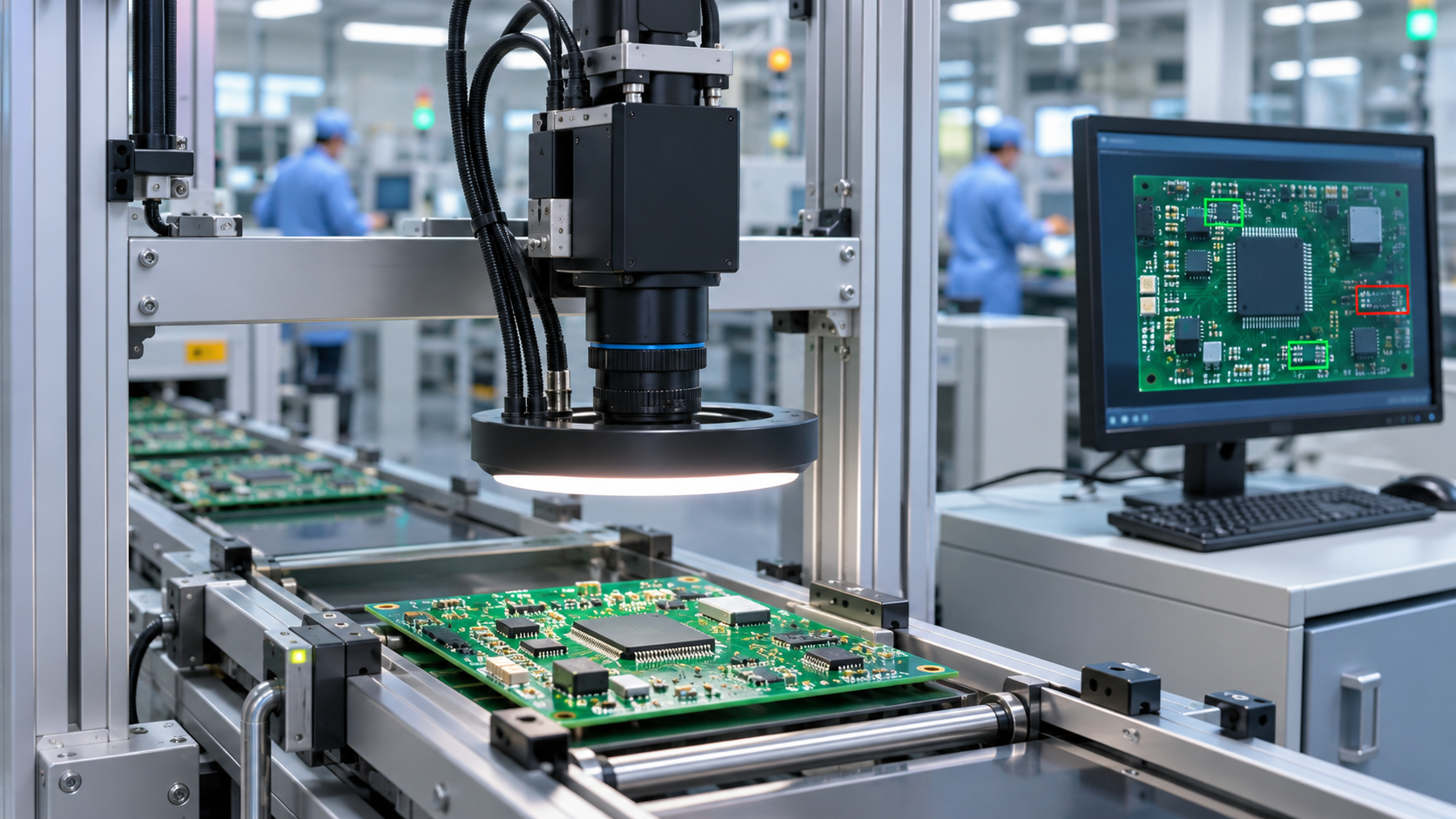
Checking a new circuit board often starts with a physical sample. However, Siemens and NVIDIA are developing a way to prepare some checks earlier.
On 21 October 2026, Siemens announced an AI-powered PCB inspection workflow. It combines digital models with computer-generated images to help teams prepare quality checks before production starts.
Siemens is demonstrating the project at its electronics factory in Erlangen, Germany. The goal is to reduce preparation work and help factories introduce new products faster.
What Is PCB Inspection?
A printed circuit board, or PCB, connects electronic components. These boards sit inside many industrial and everyday products.
Automated optical inspection uses cameras to check assembled boards. When the system flags a possible fault, a further review may follow.
Before these checks can work, teams need suitable reference data. For example, the system needs to tell a sound board from one with a possible fault.
How the New Approach Works
The Siemens workflow combines Teamcenter, Process Preparation X, and NVIDIA Cosmos.
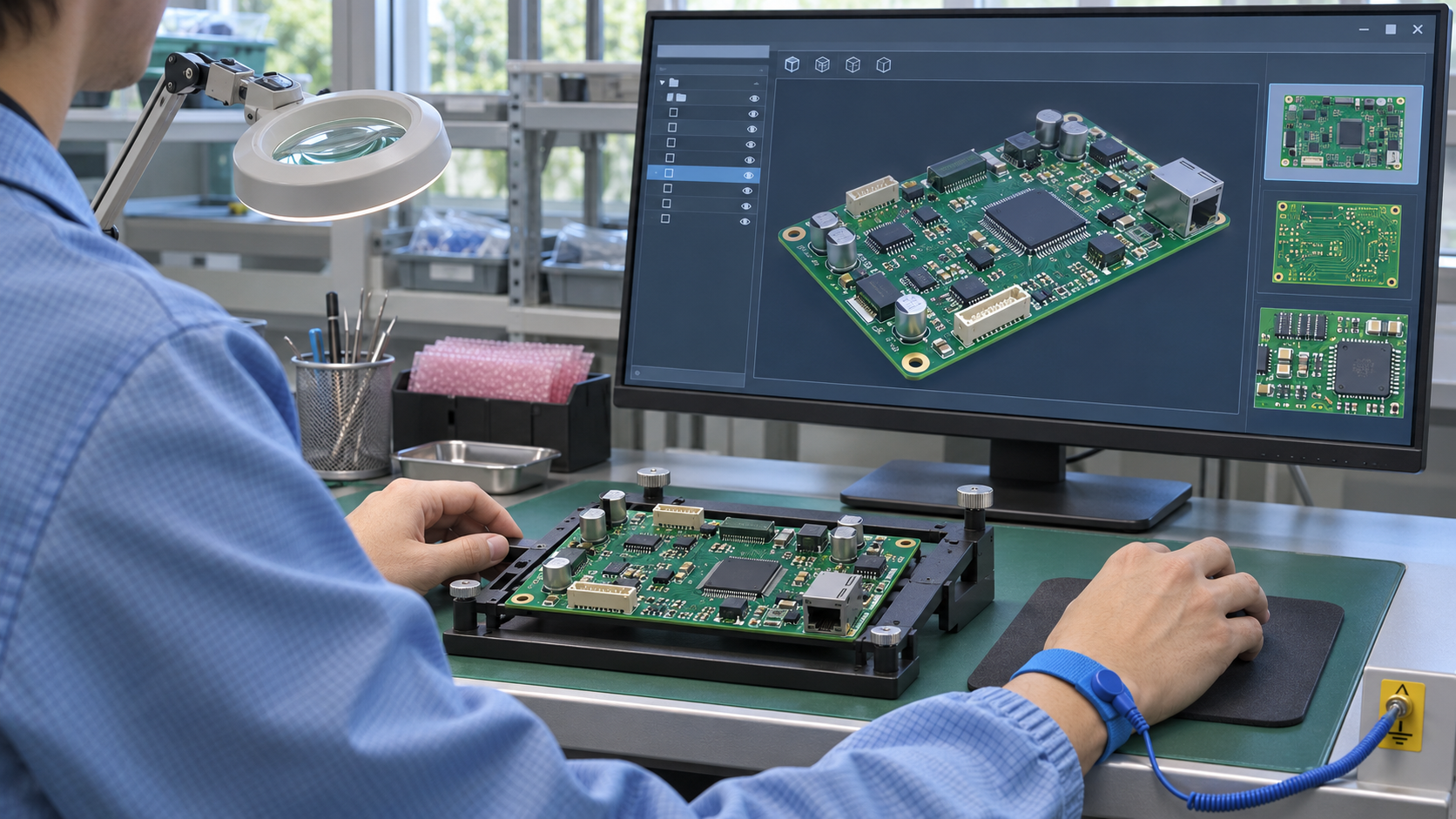
First, design files, component details, and a parts list help create a digital twin. This is a digital model of the assembled board.
Next, NVIDIA Cosmos helps generate realistic images for inspection preparation. These include a reference board and examples of possible faults.
The workflow also uses AI to review flagged conditions during production. Its purpose is to help teams tell real faults from false alarms.
Why Earlier Preparation Matters
Our analysis: the main change concerns when teams can start their work.
For example, imagine a factory preparing a new version of a product. If quality teams must wait for sample boards, some inspection work starts late.
A virtual reference could let teams prepare checks while others arrange parts and production equipment. As a result, more preparation could happen at the same time.
However, teams still need to test the checks on real boards. They must establish how well the virtual preparation works under actual factory conditions.
What the Performance Figures Mean
Siemens lists project targets that include up to 85% less manual effort when creating optical inspection programs. It also targets fewer false alarms and more boards passing checks the first time.
These figures describe company-reported project targets. They do not guarantee the same results at every factory.
Our analysis: buyers should ask what the teams measured and which boards they tested. They should also check how the project compared results with the earlier method.
Less preparation time can help. However, the checks must still find faults reliably.
Part of a Wider Factory Project
The inspection work forms part of Siemens and NVIDIA’s wider collaboration at Erlangen.
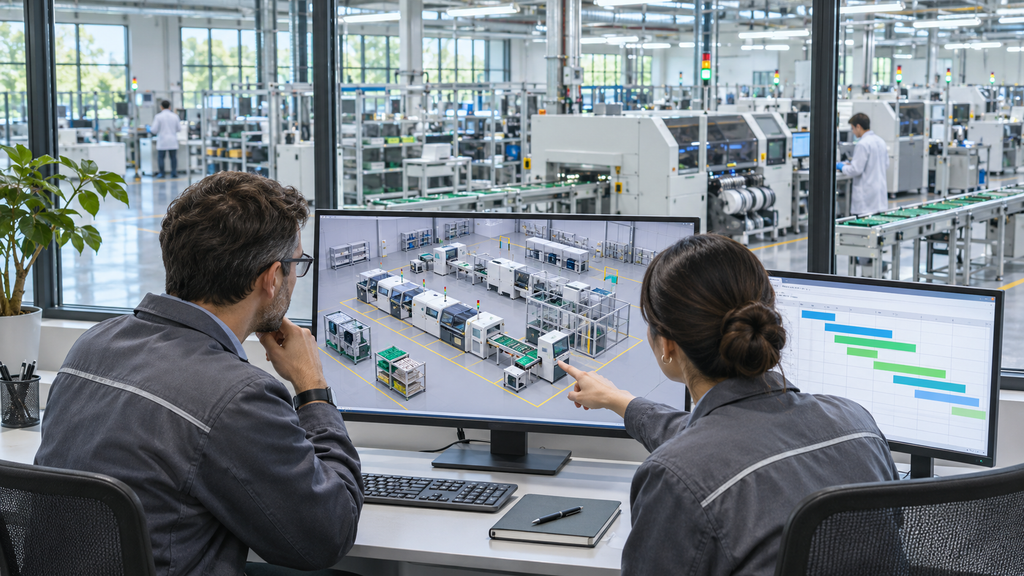
In a separate announcement on 19 October, Siemens described AI tools that create production-plan options. These tools consider new orders, available parts, and factory capacity.
The workflow then checks proposed plans against a digital twin of the factory before teams put them into use.
Siemens uses Erlangen to develop and test these approaches during live production. The work therefore connects digital planning with real factory tasks.
The Infrastructure Behind Digital Production
Our analysis: factory AI also depends on the systems around it.
Project teams should identify which computers, controls, and inspection tools need a steady power supply. They should also plan how these systems restart after a power cut.
For background, Risentric’s guide to how an online UPS works explains normal, battery, and bypass power paths.
This guide offers related technical reading. It does not describe the power equipment in Siemens’ project.
What to Watch Next
The next useful evidence will show how the workflow handles different boards and factory conditions.
For example, buyers can ask:
- How much testing on real boards does the process still need?
- Which faults can the system find?
- How often does it flag a sound board?
- How do teams update checks after a design change?
The project shows how companies can apply AI to a specific factory task. However, wider adoption will depend on reliable results and clear evidence from further use.
Leave a Reply