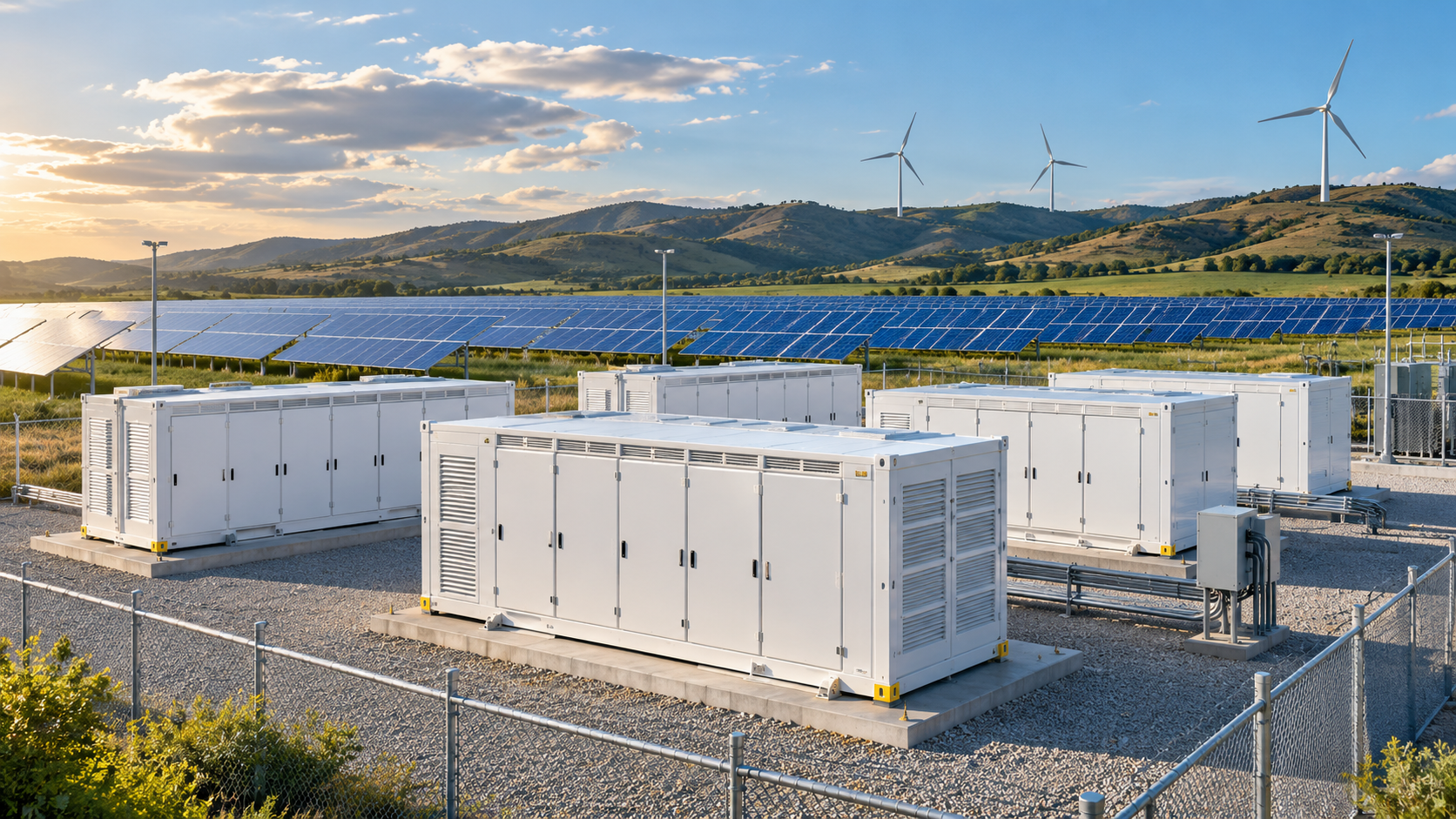
Solar panels and wind turbines generate electricity when natural conditions allow. Electricity demand follows a different rhythm, shaped by working hours, weather, industrial activity, and everyday life.
Battery storage helps connect these two patterns. It can absorb electricity during one period and release it when the system needs it more.
The International Energy Agency’s 2026 analysis identifies batteries as an increasingly important source of short-term flexibility, supporting renewable integration, balancing services, and electricity supply during periods of high demand.
Moving Electricity to a More Useful Time
Consider an illustrative solar-powered commercial facility. Its panels may generate strongly around midday, while some electricity demand continues into the evening.
A battery could store part of that daytime generation for later use. Whether this makes financial and operational sense depends on the facility’s consumption pattern, electricity tariffs, export arrangements, and storage costs.
The important measure is therefore more than how much electricity the panels produce. It is also how effectively the facility can use that electricity.
Storage shifts energy across time, with some losses during charging and discharging. It does not create additional energy.
Supporting the Wider Electricity System
At utility scale, batteries can perform functions beyond supplying one building.
The IEA identifies rapid balancing, grid support, capacity provision, and shifting renewable generation toward periods of higher demand among their applications. In some circumstances, storage can also defer or reduce the need for particular network upgrades.
These services have different operating requirements. A system responding briefly to a grid disturbance may need a different design and operating strategy from one delivering electricity throughout an evening demand peak.
That distinction matters when comparing projects. A large power rating alone does not explain how long a battery can discharge or which services it is designed to deliver.
Backup Power Is a Separate Requirement
A battery installation intended to reduce electricity costs should not automatically be assumed to maintain a facility during an outage.
Project teams need to establish whether the complete system supports operation without the grid, which loads remain connected, and how the transition takes place.
Sensitive equipment may also need a dedicated power-continuity arrangement. For readers exploring that distinction, Risentric’s explanation of how an online UPS works follows the equipment’s normal, battery, and bypass power paths.
The useful question is specific: what happens to each critical load when the incoming supply disappears?
The Connection Matters as Much as the Battery
A storage project must work with the electrical network around it. Its connection arrangement, protection, controls, and operating responsibilities need to be coordinated.
For background on one type of medium-voltage distribution equipment, Risentric’s ring main unit guide explains how RMUs connect, switch, and protect distribution circuits. Whether an RMU belongs in a particular storage project depends on the network design.
This wider system view helps prevent a common planning mistake: evaluating the battery separately from the infrastructure needed to operate it.
What to Ask Before Comparing Projects
A useful initial assessment should establish:
- What problem will storage address: energy shifting, peak demand, grid services, or backup?
- How much power is required, and for how long?
- What charging source and operating schedule are expected?
- Which grid-connection permissions and studies are needed?
- What maintenance, performance guarantees, and end-of-life arrangements are included?
These are planning questions rather than a substitute for project engineering.
Growth Depends on More Than Technology
In its May 2026 commentary, the IEA reported expanding battery deployment across more markets. It also identified grid-connection delays, permitting, and regulatory uncertainty as barriers that could influence future growth.
Our assessment is that successful projects will combine suitable technology with a clear operating purpose and a workable connection strategy.
As renewable generation expands, battery storage offers more choices about when electricity is used. Its practical value comes from matching those choices to the needs of the facility and the wider electricity system.
Leave a Reply